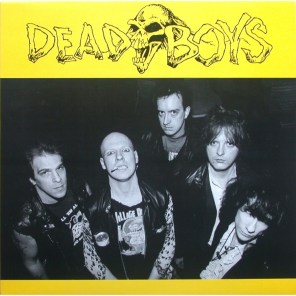
My brother got me Please Kill Me for my 16th birthday back in the grand ol’ year of (Death Race) 2000 and, as a result, I got into the underworld of 70s punk rock. When all the other kids were listening to their Blink 182 and Sum 41 or what have you, I was rockin’ and rollin’ to the New York Dolls, Stooges, MC5, Dictators, Ramones, Richard Hell and the Voidoids, Johnny Thunders and the Heartbreakers and, of course, this here pictured band of merry pranksters called the Dead Boys.
Delightfully trashy, sleazy and juvenile, the Dead Boys – singer Steven “Stiv” Bators, lead guitarist Eugene “Cheetah Chrome” O’Connor, rhythm guitarist William “Jimmy Zero” Wilden, bassist Jeff “Magnum” Halmagy and drummer Johnny “Blitz” Madansky – hail from Youngstown, Ohio where Cheetah Chrome, Johnny Blitz and Stiv Bators were in the short lived proto-punk/art rock band Rocket From The Tombs with future Pere Ubu members David Thomas and Peter Laughner.
The Dead Boys made two albums for punk’s major label industry leader Sire under the hope that they would knock Foreigner off the radio. It didn’t happen, the band was dropped and broke up, occasionally reuniting during the 80s, while Bators went onto a power pop solo career before joining Lords of the New Church. In 1990 he died while in Paris after getting hit by a car and not going to the hospital. As for the rest of the members, well, eh… Cheetah did release a solo single and jam with both Nico and a pre-poopy GG Allin and way later reformed Rocket along with a new band called the Batutsis with Sylvain Sylvain.
Also, Stiv Bators was really short and scrawny and liked to entertain the audience in a manner similar to Iggy with antics like hanging himself from the pipes above, rolling all over the stage, crawling between other members’ legs, jumping into the crowd and acting like his neck and head are a penis that spits loogies.
One last thing: a lot of record labels seem to think you can’t have too much of a good thing so they released a lot of posthumous Dead Boys live product. I don’t have all of the live albums so I apologize if the discography seems incomplete. As I purchase or download more, I’ll add and review them.
Eve of the Dead Boys EP (by Frankenstein) – Hell Yeah – 1996
Before the Dead Boys called themselves the Dead Boys, they called themselves Frankenstein. Interestingly the name didn’t come directly from the source but from David Carradine’s character in the hilariously violent, 1975 Roger Corman produced exploitation film Death Race 2000.
Before they were a punk band or rather, before there was a thing widely known as “punk rock”, the members of Frankenstein wore their hair super long, smeared makeup all over their faces and decked themselves out in creative of ways – for instance, Stiv Bators wrapped himself up in electrical tape – with obvious stylistic nods to Alice Cooper, the New York Dolls and Iggy (especially Cheetah Chrome’s dog collar).
The group only performed a handful of times. One of those includes their 1975 Halloween show where they had a guy roam the stage in a Frankenstein monster costume while the band played a mixture of originals and covers, among which included “Deuce” by Kiss, “Death May Be Your Santa Clause” by Mott the Hoople and “Don’t Mind Rockin’ Tonight” by Ducks Deluxe.
But, more importantly than a few covers is their originals. This here three track EP proves that with the punk tag or not, they had their sound intact. All three tracks on Eve of the Dead Boys would end up on the first Dead Boys album. Although a tad slower than the album version, “Sonic Reducer” sounds as it would on album, which makes it even more of a trip to picture them performing the four chord punk tune decked out in their outrageous, pre-punk stage attire. Stiv Bators doesn’t sound as biting as on the album but that might have to do with his voice being buried by lousy demo production. Chrome’s and Zero’s guitars are ferocious and slashing as they would be on the album.
The other two songs are the apocalyptic, coke paranoia ballad “High Tension Wire” and the high speed, “chuga-chuga” punker “Down in Flames.” “High Tension Wire” has a slightly different arrangement with the dark, sick bridge riff played twice but “Down in Flames” sounds just like the album version complete with Bators’ white trashy shouts of “DEAD BOY! DEAD BOY RUNNIN’ SCARED!”
Young, Loud and Snotty – Sire – 1977
Play loud and play often.
Any punk fan worth his/her/its salt is familiar with the upper, mid-tempo, four chord punk anthem “Sonic Reducer”, that kicks off the just under 30 minute long, debut Dead Boys LP Young, Loud and Snotty. But for those who are unfamiliar, I’ll give you a brief breakdown.
Song kicks in with two chords (“dah-dah”), followed by the four chord riff played on the root notes with a phasing effect, then the main riff is played as bar chords accented with “dee-dee-dee-dee” string bends, then the main riff is played with palm mutes (“chugga-chugga-chugga-chugga”) while a pissed off, white trashy, slurred but totally understandable, Midwest punk guy shouts these opening lines:
“I don’t need anyone
don’t need no mom and dad
don’t need no pretty face
don’t need no human race
I got some new for you
don’t even need you too”
and then things get confusing. For the whole of my life, I thought the next line was “I got my time machine/got my electronic dream” because, ya know that makes sense right? “Me against society”, punk attitude crossed with a weird, science fiction concept. What else could it be BUT a time machine? Alas, according to Cheetah Chrome’s autobiography, it’s “dull machine.” Oh well, life goes on.
The rest of Young, Loud and Snotty contains three more songs in the vein of “Sonic Reducer” and its muscular, metalled up punk, one speedy song with a very glammy riff and a gross title, one melodic, “Anarchy in the U.K.” tempo punky number with equally sleazy lyrics (“all this and more, little girl/how about on the floor, little girl”), a New York Dolls-y, mid-tempo rocker that’s apparently about Lydia Lunch but has the lines “I don’t really wanna dance/girl, I just wanna get in your pants”, two ballads and a cover of a 60s pop song that the group manages to make sound sleazy without even changing the words.
The strength of Young, Loud and Snotty, if you haven’t guessed already comes from a combination of Cheetah Chrome’s and Jimmy Zero’s super tight playing and killer riffs combined with Stiv Bators’, slurred, pissed off, punky drawl which turns the worlds “girl” into “guuhl” and “pants” into “payants.” Regarding the playing Cheetah Chrome (and probably Jimmy Zero even though he’s a rhythm guitarist so it’s harder to tell) is not some “bar chords only”, punk rock novice like say, mmm, Johnny Ramone.
Furthermore, while most people basically compare the Dead Boys with the Stooges and the Dollsand, while Chrome’s playing has similarities with James Wiliamson’s and Johnny Thunders’, much of the tight, mean guitar interplay between Chrome and Zero along with their filthy, distorted but not heavy tones reminds me of Glen Buxton and Michael Bruce, lead and rhythm guitarists form the Alice Cooper group. This is especially so on the dark, minor chord, hard rock ballads “Not Anymore” and “High Tension Wire.” Hell, I’d compare “Caught with the Meat in Your Mouth” with “Under My Wheels” and “High Tension Wire” with some of the evil, sick riffing in songs like “Is It My Body” or “Halo of Flies.”
Lyrically though, the album is very Stooges inspired. “Sonic Reducer” has the same antisocial message as “Search and Destroy.” “Ain’t Nothin’ to Do” is thematically similar to “No Fun.” “All This and More”, “What Love Is” and “I Need Lunch” are fuck songs just like “I Wanna Be Your Dog”, “Loose” or “Penetration.” And “Down in Flames” doesn’t fit any of these categories since it’s about some nuclear bomb detonating crazy guy and the riff is similar to “Nights in Venice” by the Saints.
On a final note, Johnny Blitz is a very good drummer and Jeff Magnum didn’t even play on the album!
We Have Come for Your Children – Sire – 1978
If you’ve read Please Kill Me, then you know that the Dead Boys, especially Cheetah Chrome and Jeff Magnum, were not particularly happy with their second album. Chrome apparently called James Williamson on the phone begging and pleading him to save the album while Magnum yelled at producer Felix Papalardi for giving the band a weaker sound. The simple idea of making a loud, guitar based rock record shouldn’t have been lost on him considering he produced Cream records and played bass for Mountain.
We Have Come for Your Children doesn’t sound THAT bad but, if you’re expecting the same raw and dirty guitar tones or, hell, the same level of intensity, anger, power and oomph from the first album, you’d best just play Young, Loud and Snotty again. Indeed part of the less aggressive sound can be blamed on the production but the other part of the problem lies with band itself. The first of these problems is that Stiv Bators doesn’t sound nearly as pissed off as he did on the first album. Sure he has a punky slur but he sounds a little to comfortable and laid back. The second problem unfortunately lies in some of the songs.
But, let me stress that, in spite being less aggressive, We Have Come for Your Children is still a good album, chock fulla killer riffs and hooks that, for the most part, measure up to those on the first album. In fact “3rd Generation Nation”, “(I Don’t Wanna Be No) Catholic Boy”, “Flamethrower Love” and “Dead and Alive” could easily fit on Young, Loud and Snotty with their middle, upper tempo, punky hard rock. And I don’t care what Cheetah Chrome says about the Kim Fowley penned “Big City”; it’s a good, medium tempo, glammy, punk tune.
Also, just like the first album, We Have Come… has two ballads; the creepy as all hell, David Berkowitz epic “Son of Sam” (for which I still think Spike Lee dropped the ball for not including in his movie) and the bleak and depressing album closing tail of drug induced meltdown “Ain’t It Fun.” Interesting thing about the latter song: It was initially co-written by Peter Laughner back when he and Chrome were in Rocket From The Tombs together and, when I asked Cheetah Chrome at a book signing if the song was essentially an anti-drug song, he said it wasn’t. This surprised me because when a song says, “ain’t it fun when you’re always on the run/ain’t it fun when your friends despise what you’ve become/ain’t it fun when you get so high that you just can’t come”, the answer is, “no, it ain’t fun at all.” Yet, according to Chrome, there was nothing anti-drug about Peter Laughner.
But the real culprit of the album, the songs that are undoubtedly going for a more power pop approach are “I Won’t Look Back”, “Tell Me” and “Calling on You.” And sure, that’s just three songs out of 10 but the effect is very noticeable; nicely sung, happy pop choruses and, in the case of “Calling on You”, a happy lead guitar line. These aren’t bad songs but they definitely point to the approach on Stiv Bators’ post-Dead Boys power pop solo album, Disconnected. What’s really strange though is that “Tell Me” is a punked up cover of the sappy Stones ballad.
Even the lyrics are tame by comparison. Oh sure, “Ain’t It Fun” uses the word “cunt” and “Catholic Boy” has that line where he goes, “I wanna beat my meat right in the street” but that’s about as bad as it gets. The rest of the lyrics deal with being an outcast and the rough and tumble city lifestyle and “3rd Generation Nation” is about the closest they came to a political song (“the better world you tried to build exploded in your face”). But one song that really confuses me is “Calling on You.” I could easily just read it as a song about a guy hanging out somewhere, not digging the scene, missing a special person (Cheetah Chrome thinking of Gida Gash maybe?) but, am I crazy to see spiritual overtones in these lyrics? You tell me:
“You shining in the sky
Faster than the naked eye
I’m calling calling calling on you
Things here got outta hand
Take me back to the promised land
I’m calling calling calling on you”
Now that ain’t young, loud or snotty!
Night of the Living Dead Boys – Bomp! – 1981
By 1979 the Dead Boys were dead in the water. Sire records didn’t want anything to do with them anymore since their records failed to capture the youth of America but, for some strange reason, they wanted them to record a live album. In a last ditch attempt to stick it to the man, Stiv Bators gave them the ol’ middle finger by performing the entire show off mic, rendering the recording unusable.
Two years later, after he released Disconnected and around the time he was going to join Lords of the New Church, Bators dubbed all of his vocals onto the live performance resulting in the first of several posthumously released Dead Boys live albums.
Night of the Living Dead Boys contains five songs from Young, Loud and Snotty, six from We Have Come for Your Children and a new song called “Detention Home”, which seems indicative that, if the Dead Boys did release a third album, it might very well have had a more melodic, 60s-ish, garagy sound.
The sound on the record is fantastic with the guitars are reverbed and loud but I wish Bators put a little more energy into his performance; I suppose that’s par for the course since his vocals were recorded in a studio over an already existing live track. Undeniably the We Have Come for Your Children songs like “I Won’t Look Back”, “Son of Sam” and “Tell Me” sound a bit tougher in the live setting even if it isn’t totally fitting for the group’s snotty image to sing, “come back to me baby, come back to my heart.” There are also few mistakes and flat notes every now and then, especially on a particularly sloppy performance of “Sonic Reducer.”
Other points of interest include Bators’ cute little one liners and asides such as the classy “you hungry?” before playing “Caught with the Meat in Your Mouth”, “every kid’s dream is to be a Dead Boy!” before “All This and More”, “this was written by a friend of ours, Peter Laughner. You know that we’re all gonna die young” before “Ain’t It Fun”, the tasteful “this is for Davey” at the beginning of “Son of Sam”, the not so nice announcement “we’re not doing this for you. We’re doing this because we’re getting paid” before starting “Sonic Reducer” and especially the trilled R, Johnny Rotten homage, “rrright now!” at the beginning of “I Won’t Look Back.”
Also Bators replaces the “hippie” in the “gonna beat up the next hippie” I see line from “Ain’t Nothin’ to Do” in both occurrences to “punk” and “skinhead” but what’s up with the “gettin’ real sick of Jews”? Did it just sounds like that because of his slurred singing or was that some sort of joke or, worse yet, an attack on Seimor Stein?
I’m not gonna think too deeply into it.
“The Nights Are So Long”/ “All the Way Down (Poison Lady)” 7″ – Relativity – 1987
If you see Cheetah Chrome walking down the street and you hand him your copy of this here 7″ single in hopes that he’ll sign it, prepare to have it handed back to you in two pieces.
Apparently, whoever released it, did so without the group’s full consent, using unfinished scratch tracks for the final product.
The “The Nights Are So Long” b/w “All the Way Down (Poison Lady)” single is the only record the Dead Boys released when they reunited in 1986. The band had done reunion gigs a number of times before but, in 1986, they made a full attempt at reforming in hopes of relaunching their career.
Well, it didn’t happen and the group would only perform together on a few other occasions before Stiv Bators would go to France in hopes of forming a punk super group called the Whores of Babylon with Johnny Thunders and Dee Dee Ramone but, instead, would end up dead from getting hit by a car and refusing to go to the emergency room.
Both the a and b sides are perfectly okay power pop tunes that resemble the lighter moments on We Have Come for Your Children with side two being a teensy bit faster. The drum sound is also a bit reverbed since it was recorded in the 80s and the guitars don’t sound very loud but, basically these are not the tough punk songs you would imagine coming from the band pictured on the sleeve. In fact, “All the Way Down (Poison Lady)” sounds more like a Dictators power pop song (maybe “16 Forever”) than a Dead Boys one.
I read that Jeff Magnum quit shortly after and the band performed a number of shows as a four piece sans bass guitar just like they did in their early CBGBs days.
Perfect Strangers
The House of Blue Light
Nobody’s Perfect
Slaves and Masters
The Battle Rages On
Come Hell or High Water
Purpendicular
Abandon
Bananas
Rapture from the Deep
Now What?!
Note: I’ve just been busy so don’t worry; I’m not neglecting the band’s 1984 and post catalog. I plan on reviewing those albums as well.
Deep Purple is typically associated with Black Sabbath and Led Zeppelin as one of the primary creators of hard rock and heavy metal. Ritchie Blackmore’s crunchy, heavy riffs served as a foil for Jon Lord’s distorted Hammond organ blasts while singer Ian Gillan belted out twisted lyrics in his big, brawny voice and anyone who listens to classic rock radio is familiar with hits such as “Highway Star” and “Smoke on the Water.” But it wasn’t always that way.
The group formed in 1967 as Roundabout and Blackmore, Lord and drummer Ian Paice were originally joined by croony lead singer Rod Evans and bassist Nick Simper. The band made three albums of psychedelia/prog/blues/classical/rock under the Tetragrammaton label (EMI/Parliaphone in Europe) scoring a huge hit with a cover of “Hush” before replacing Evans and Simper with Ian Gillan and Roger Glover from Episode Six. After a quick detour into playing with an orchestra, the band unleashed a series of awesome metal/proto-metal/heavy rock albums.
Then Gillan and Blackmore couldn’t get along so they got future Whitesnake singer David Coverdale when he was just an unknown along with Glenn Hughes of Trapeze to sing and play bass. The band turned into more of a funky, coke-fueled, 70s cock rock band for a few albums before Blackmore had enough and started Rainbow. They made one more album with Tommy Bolin and called it a day.
Eight years after that they got back together for more albums and member switcharoos.
Shades of Deep Purple – Tetragrammaton – 1968
Their record label was owned by Bill Cosby! How do you like that?
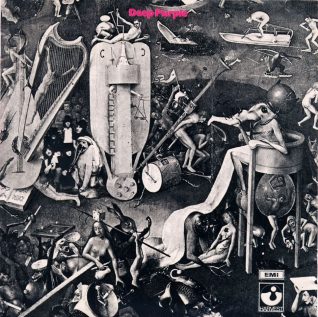
The debut Deep Purple LP is easily their most psychedelic as one might expect considering it was released right at the height of druggy hippy era. But one thing is for sure; the members of Deep Purple come fully armed with their technical skills. Guitarist Ritchie Blackmore, keyboardist Jon Lord and drummer Ian Paice can jam! Blackmore is a skilled, bluesy player with a more than obvious nod to Hendrix but not without his own, unique style and Lord is classically trained. I don’t know that much about Paice’s drumming except that he does all kinds of awesome rolls and fills. Original singer Rod Evans has a pleasant if a bit dull, mid-range croony voice which might come as a surprise for people used to Ian Gillan’s shouting and bassist Nick Simper is a normal rock bassist, doing just a little more than playing the route notes.
Shades of Deep Purple consists of eight tunes, four of which are covers. On the covers, in a manner similar to Vanilla Fudge, Deep Purple gussy up normal rock and pop songs with extended psychedelic and baroque passages. The lead guitar/organ interplay might also evoke comparisons with Iron Butterfly. Some of the jamming goes on so long you almost forget the original song that the group is covering! But that’s okay because the solos aren’t just a bunch of pointless note wanking; they actually go somewhere and create dramatic tension. The other most obvious comparison is with Cream especially with driving, heavier tunes such as instrumental, opening cut “And the Address” and similarly heavy rocker “Mandrake Route.” I also want to note that when I say “heavy”, I’m talking 60s psychedelia not the crunchy hard rock/heavy metal of the MK II lineup. They’re still a long way from making that kind of music at this point.
The big hit on the album is the group’s energetic, groovy cover of Joe South’s “Hush”, which immediately and briefly catapulted the band into the big time before they dropped off just as quickly.
Other noteworthy aspects of the album include:
“I’m So Glad” – extremely catchy and melodic cover of a 1931 Skip James song with chords played as arpeggios “One More Rainy Day” – hippy-dippy, la-de-da, girl-with-flowers-in-her-hair-dancing-in-the-field cheesiness “Help” – turning the once uptempo, energetic folk rocker into a slow, dreary ballad “Love Help Me” – completely out of place but totally awesome, high energy, psychedelic surf rocker “Hey Joe” – fun Spanish-scale, conquistador music surrounding an otherwise straightforward cover
Minus a couple of dud spots (“One More Rainy Day” and “Help” for instance), a pretty auspicious start, I’d say!
The Book of Taliesyn – Tetragrammaton – 1968
The Purple saga continues with their slightly better sophomore release The Book of Taliesyn. Like its predecessor the sound pulls from a variety of sources but the quintessential ingredients of Ritchie Blackmore’s acid blues guitar and Jon Lord’s dramatic organ remain intact. The sound is also ever so slightly harder and rockin’ and less psychedelic and hippie-ish with Blackmore turning up the distortion. There is no hokey, “Summer of love” inspired shite like “One More Rainy Day.”
Judging by the cover, you’d think they’d gone all King Crimsony before King Crimson even came out. But that’s a ruse. The only allusions to fantasy and renaissance era dorkiness are opening track “Listen, Learn, Read On” and side two opening track “The Shield.” “Listen, Learn, Read On” was apparently inspired by the 6th century poet of the album’s namesake – that’s what wiki said anyway – but it honestly rocks with a charging drumbeat and distorted guitars and is the first indication that the Purple are going in a louder, heavier direction.
After that there’s the straight ahead 4/4 blues jam called “Hard Road” and their popular cover of Neil Diamond’s “Kentucky Woman” – which, for a Neil Diamond song is pretty damn rockin’! Then side one ends with a medley containing the epic, dramatic Purple penned intro “Exposition” followed by a slightly expanded cover of the Beatles classic “We Can Work It Out.”
Side two kicks off with the Iron Butterfly, keyboard rocker “The Shield.” It’s neat, melodic and tells the tale of some people who live on a hill and are protected by a shield of some sort. Among other things it has some interesting percussion. After that we have a somber, misty-eyed ballad called “Anthem” in which Rod Evans especially sounds like a 1950s crooner; the vocal melody that goes, “if only I could see you-oo” is honestly very pretty. The song then turns into a classical jam with Lord and Blackmore soloing against a violin before it goes back to its original, soft rock vibe. The album concludes with a gnarly, ten minute cover of Ike and Tina Turner’s “River Deep, Mountain High” complete with lengthy, 2001: ASpacey Odyssey, “Also sprach Zarathustra” introduction and includes the expected Ritchie Blackmore guitar solos.
So there you have it, no sophomore slump.
Deep Purple – Tetragrammaton – 1969
Interesting that they decided to name their third album after the band. I can only guess it might have to do with the fact that the majority of the material on the album is original and the group is really finding their voice. The only cover is of Donovan’s “Lalena” which, sad to say, is also the most boring song on the album with Rod Evans’ soulless crooning on a listless, emotionless ballad.
But why focus on the bad? This is easily my favorite MK I Deep Purple album. It rocks the hardest and the songs are the most interesting of the three. It basically picks up where The Book of Taliesyn left off and, like its predecessor, draws from a bunch of different influences but still remains clearly focused on the skills of Ritchie Blackmore’s even more acidy sounding guitar, Jon Lord’s diverse set of organ tones, Ian Paice’s wicked drumming and the interplay between the three.
The album opens with what I easily consider my favorite MK I (or any, really) Deep Purple song, “Chasing Shadows.” It sounds like the nightmarish cover looks as Rod Evans guides you through his bad dream (or acid trip?) and is driven by evil, Haitien, hoodoo voodoo drums which you might have heard in some old zombie movie. So freakin’ cool! It’s followed by “Blind”, which makes fantastic use of the harpsichord sound to create that Mid evil vibe. Then there’s the dull as dirt “Lalena” before side one ends with a medley featuring the acid guitar, backwards drum intro “Fault Line” and the energetic, groove rocker, “The Painter.”
Side two begins with “Why Didn’t Rosemary?”, another straight ahead, 4/4 blues jam with lyrics inspired by Rosemary’s Baby – “Why didn’t Rosemary ever take the pill?” (get it?). It’s followed by the pounding, wah-wah fueled, Hendrix/Cream-esque hard rocker “Bird Has Flown.” After that the album concludes with the 12 minute, mega opus “April” which contains multiple sections, starting with a dual tracked acoustic/electric guitar plus keyboard, classical intro which is then followed by a full on classical section containing violins, violas, cellos, oboes and clarinets – your parents will think their degenerate, long haired freak son is listening to classical music because he IS!!! – and a final, melancholy rock section in which Rod Evans croons about April being a sad time or something. I’m all for this early Deep Purple but, again, I listen to Deep Purple to rock out so thankfully they would drop this sort thing and change tracks.
After Deep Purple came out, Rod Evans and Nick Simper hit the road and Ritchie Blackmore, Jon Lord and Ian Paice recruited the mighty Ian Gillan on vocals and his Episode Six band mate Roger Glover on bass and we all know how that turned out!
Concerto for Group and Orchestra – Tetragrammaton – 1969
What a weird way to introduce a new lineup. I’d like to find out what the thinking was behind this and who green lighted this project because I can’t imagine who the audience for this thing was supposed to be. I’m going to wager that classical aficionados prefer the masters over some keyboardist named Jon Lord from some rock band that was only marginally popular at this point. Furthermore, since Deep Purple was only marginally popular, did the label think Concerto for Group and Orchestra was the best way to win the band some new fans?
Concerto for Group and Orchestra was indeed the first of its kind in that it presented a hard rock band performing live with a symphony orchestra, specifically the Royal Philharmonic Orchestra live at the Albert Hall. However, unlike future bands like Kiss and Metallica who did this type of thing, Deep Purple didn’t play their own songs and have them embellished with orchestral arrangements. Nope, as indicated by the title, Jon Lord wrote the entire concerto.
And big ups to him for that because I don’t typically use the cliched term “self indulgent” but I can’t think of a better word in this case. It’s basically just classical music with a rock band chiming in to say, “hey! we’re a rock band!” I’m no classical musical expert so I can’t tell if this is “good” classical music or if this is a beginner’s composition. What I can say is that when you have an entire orchestra and then you have one guitarist, one bassist, one keyboardist and one drummer, who do you think is going to dominate the performance?
I don’t want to sound negative in my assessment of Concerto for Group and Orchestra. When Deep Purple start playing, shit starts rockin’ and there are neat parts where the orchestra and band harmonize together; these parts are the most interesting as is when the orchestra plays the crescendos. I also enjoy the parts where the orchestra goes, “BOOM, BOOM” and band answers back in kind. But, during those pretty, quiet parts, I can picture Ritchie Blackmore standing around, whistling, waiting for his chance to start wailing away.
Side two begins with Lord playing some mellower shit on his keyboard in harmony with the orchestra, which I assume excited him more than say, any other member of the group. Again there are more jammy moments between the band and orchestra with Lord’s Hammond getting particularly noodly and proggy and Blackmore playing those Mid evil scales and there are some more crescendos scattered throughout. Also Ian Paice uses some neat clinky, clanky percussion towards the end as well. The funniest thing though is that Ian Gillan sings about two lines on the entire record; something about seeing some woman and her seeing him back and I think I heard the word “sword” in their somewhere as well. As evidenced by his claim that he wrote the lyrics the night before performing, I’m going to guess Concerto… wasn’t exactly his dream project. But thankfully, they would go back to the drawing board right after this.
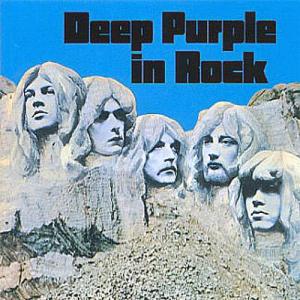
Deep Purple in Rock – Warner Bros. – 1970
“Black Night” isn’t on this album?!
Almost as if the last three years didn’t happen, Deep Purple in Rock can be considered Deep Purple’s second debut album. Although the band still contains three original members, many consider …in Rock to be the true start of Deep Purple, placing them right along side Sabbath and Zeppelin as early progenitors of METAL!!!
Just a brief comparison between the three, where Sabbath was probably heavier and gloomier and Zeppelin had a sexy, cock rock swagger and groove, Deep Purple is simply the toughest and most aggressive of the three and possibly the most aggressive band in the era before there was punk, hardcore or thrash. The only other band that seemed to rock as hard as Deep Purple was maybe the MC5 or the Stooges and the only singers that came close to the level of aggression of Ian Gillan’s was maybe Rob Tyner or Iggy Pop. Unlike Ozzy’s monotonous singing (which fits Sabbath’s music really well, mind you) or Robert Plant’s high pitched operatic howl, Ian Gillan belted out the lyrics in a tough, brawny manner while still managing to hit notes. I wouldn’t be surprised if Lemmy or James Hetfield took a cue or two from Gillan (“into the fiyyya”, “jump in the fiyyya”?).
Now I understand that Deep Purple is pretty tame by today’s standards but even the most jaded metal heads can’t deny the opening power riffs of “Speed King” and not think, “wow, this came out in 1970?” Actually, on the U.S. version they cut off the long intro for some stupid reason. Either way though Deep Purple in Rock contains seven original tunes filled with Ritchie Blackmore’s wicked ass, mean as nails, heavy riffs and Jon Lord’s various Hammond organ melodies all of which are pounded out in various tempos and grooves – saving the heaviest and best for last with “Hard Lovin’ Man” and its awesome, “der-digga-der-digga”, metal galloping. Side two opener “Flight of the Rat” would be considered a fast song – perhaps even a bit punky – and I absolutely love that catchy melody Blackmore does at the end of each verse. And I tell ya, as much as I love Blackmore’s blooozy solos, I even more get a kick out of Lord’s distorted organ with all those discordant notes that sound like they’re crashing into each other! What other band from the era did that?
Some things I want to point out are that opening cut “Speed King” might be tough for some to get into because it seems like Gillan is shouting the lyrics without any sort of rhythm at all; I’ve gotten used to it plus it sounds cool when he yells, “Good golly Miss Molly!” “Child in Time” is a melancholy, 10 minute epic ballad which has some Vietnam era social commentary. Also the lyrics for “Living Wreck” are weird! I’ll reprint them for you and you tell me what this song is about.
You came along for a weekend
But you only stayed for one night
You pulled out your hair
You took out your teeth
Oh I almost died of fright
You’d better do something for your own sake
Ah you know you’re a living wreck
You said you were a virgin
Full of promise and mystery
But I know that you
Would bring me down
‘Cos everyone calls you big G
You’d better do something for your own sake
Yes it’s a shame
ah you know you’re a living wreck
What’s that about? An old woman posing as a groupie? Who the hell is “big G”? Arrrghggh!!!
This album rules.
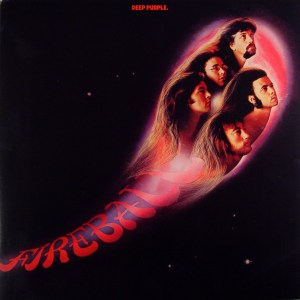
Fireball – Warner Bros. – 1971
Fire! Fire! Deep Purple sure like fire! You’ve got “Into the Fire”, “Fireball”, “Burn” and “Smoke on the Water” and there’s even a lyric from this album that goes “laugh as the flames eat their burning remains.” Plus they even considered calling themselves Fire at one point.
“Demon’s Eye”?! What the heck is that? I bought the American version goddammit!
Damn, the opening title track is a scorcher! Once again let me stress that Sabbath may have been heavier with their drop D tone but if you want a soundtrack to deliberately drive as fast as possible into a brick wall, then “Fireball” is the perfect song. To me it qualifies as thrash or, at very least, Motorhead-style punk metal nearly a decade earlier. I don’t care what it’s about since it’s probably about a chick that’s a “fireball” (oo, clever!) but damn if it doesn’t tear. Especially those awesome, chaotic drum rolls at the beginning and that crazy, noisy thing that Jon Lord does right before the organ solo!
Although not quite as heavy as its predecessor and with two particularly weird tracks – “Anyone’s Daughter” and “The Mule”, which I’ll discuss momentarily – Fireball is still a terrific hard rock record full of all the good stuff one comes to expect from Deep Purple. Aside from the aforementioned opening title cut, the album has killer blues metal tunes like “No No No” with social commentary in lyrics such as “they talk about creating but all they do is kill/they say they’re gonna mend it but they never will” and the surprisingly bitter and angry heavy rocker “Fools”, which outdoes “War Pigs” in the topical, anti-war theme department. Also there’s album closer “No One Came”, a chugging number about the disappointment experienced on the road to stardom.
I’m torn though. For the whole of my life, I’ve listened to the American version of Fireball which contains “Strange Kind of Women”, a good yet bizarre song about a guy visiting a whore over and over again and winning her heart right before she dies (old age? syphilis?) but what’s this down and dirty bluesy rocker called “Demon’s Eye”? Eh it’s good, I’ll take it but I guess I’d just rather have both!
Then there are the two weird songs. “Anyone’s Daughter” is a fun, bouncy, steel guitar/boogie piano country rocker about a long haired degenerate going around banging “anyone’s daughter” until he scores a “rich man’s daughter.” I particularly like the lyrics: “I can hear your tales and lies/you say I’m dumb and scraggy/but man this dumb and scraggy/is your daughter’s baby’s daddy.” Oh lawdy… The other one is “The Mule”, a proggy song filled with constant drum rolls and psychedelic effects placed on the guitar and organ, almost like a throwback to an earlier Deep Purple era; it’s still a great song though.
And that about covers it! Say, speaking of fire…
Machine Head – Warner Bros. – 1972
If you consider yourself a rock or metal fan and Machine Head isn’t part of your collection, you’re wrong.
I first heard Deep Purple on the Dazed and Confused soundtrack way back in ’96 when I was merely 12 years old. By that point I was already a fan of Black Sabbath, Led Zeppelin, Alice Cooper, Kiss and Aerosmith (I had yet to get into Blue Oyster Cult but I soon did!) but on the soundtrack is this song called “Highway Star” with this “duh-duh-duh-duh”, upper middle tempo, driving metal riff and this guy shouting atop of it and I thought, “that’s a bit heavy for the 70s, isn’t it?”
Black Sabbath may have been heavier with their drop D riffs but you can’t really rock out or bang your head to their stuff most of the time. They’re known for being slow and doomy. Of course the lyrics to “Highway Star” are a bit silly but as far as I know the “cars and girls” theme could be a joke. Who cares? The song rocks.
Regardless Machine Head is the Deep Purple album that made me a fan and it should for everybody. It really isn’t all that different from last two albums; it’s just really, freakin’ good! The big hit is of course “Smoke on the Water”, the classic rock radio staple which tells the tale of a concert in Switzerland gone awry on the account of a “stupid with a flare gun” who “burned the place to the ground” and how the day was saved with the Rolling Stones’ mobile recording studio. The riff is an absolute classic, a cliche even and is practically every beginning guitarist’s first learned riff (either that or “Iron Man”). The song chugs along before the wicked guitar solo which is backed by these marching drums. I’m sure you’ve heard it.
But that’s not all! There’s the slower, groovier number “Maybe I’m a Leo”, the galloping, metal tale of a man freezing to death in the Swiss Alps, “Pictures of Home” – check out that awesome bass solo! -, the catchy as all hell woman lament “Never Before”, the wicked blues jam “Lazy” and, of course, the pounding, intergalactic head banger “Space Truckin'” (later to be covered by the Meatmen!!!), which is one of my favorite Purple tunes. And check out the neat drumming at the end of the song!
To sum it up, Machine Head is their masterpiece and what a cool cover!
Made in Japan – Warner Bros. – 1972
I’m not sure but did Made in Japan launch the double live album craze?
Deep Purple have released a lot of live albums and I doubt I’m gonna get or listen to every single one of ’em because life is too short even if they are one of my favorite bands.
But, to ignore this classic, would be a crime, see as Made in Japan not only encapsulates a tough, mean heavy rock band at the peak of their powers in the concert setting, it also just sounds so good! Ritchie Blackmore’s guitar sounds heavier, rawer and louder on the live album and it’s booming out of my left speaker while Lord’s organ/keyboard is comin’ out my right and Ian Gillan is just a yellin’ all over the place.
Recorded on two separate nights – August, 16th and 17th 1972, first night in Osaka, second in Tokyo – the double album contains one song from Deep Purple in Rock, two from Fireball (American version) and four from Machine Head but, as evidenced by the song count and album length, it’s no surprise that Deep Purple expand some of the original compositions with extended jams.
A few points to make:
1. Even though I already mentioned that the live album is heavier than studio albums from where the songs came, “Highway Star” and “Space Truckin'” sound especially brutal in the live setting.
2. Before the start of “The Mule”, Ian Gillan says, “can I have everything louder than everything else?” Ya here that, Lemmy?
3. The live version of the “The Mule” is heavier and less psychedelic sounding than the album version. It also just serves as a segue into a drum solo.
4. Extended blues jam during “Strange Kind of Woman” but more importantly extended Ian Gillan shouting of “OWWWWWW!!! OWWW!!! OWWW!!!” followed by singer/audience shouting match of “HEY!”
5. Wicked cool, noisy Hammond organ intro to “Lazy” which briefly includes “Louie, Louie.” Also, I don’t recall the album version of “Lazy” having a harmonica on it.
6. “Space Truckin'” takes up an entire side with a big, ol’, dramatic and speedy, marching drum and organ jam – and man, can Jon Lord squeeze some crazy noises out of that thing! – as its lengthy quota, briefly throwing in the somber, quiet part of “Fools”, followed by a big crescendo and more speedy jamming only with guitar instead of organ. Then the album ends.
My only complaint is that there are fade outs between a couple of the songs.
It’s also interesting to note that “Smoke on the Water” didn’t really become a massive FM hit until after the live version came out.
Who Do We Think We Are – Warner Bros. – 1973
The deliberately narcissistic album title couldn’t negate the fact that there was mounting tension between Ian Gillan and Ritchie Blackmore which resulted in Who Do We Think We Are being the final MK II Deep Purple album (for 11 years anyway).
Unfortunately it’s not the strongest way to go out. I’m not saying it’s BAD either; just that the songs aren’t as strong and don’t stand out as much as before. Most classic rock listeners will recognize and enjoy the album’s opening track, “Woman from Tokyo”, a slightly more commercial version of what the band usually does especially since Lord plays bluesy, boogie piano rather than crunchy Hammond on the track.
Then it’s back to good ol’ heavy stuff we’ve come to expect from Deep Purple, including the awesome, head banging classics “Mary Long” and “Smooth Dancer” and slower, more grooving blues metal tunes like “Super Trooper” and “Rat Bat Blue” (or rather “Rat bat bat bat bat bluuueee!”) (which gets fast by the end anyway). Then the album takes a couple of unusual though not particularly compelling turns at the end with the “Bad to the Bone”-style dullness of “Place in Line”, which is thankfully curtailed by a more ass kicking quota and the semi ballad “Our Lady.” I looked on allmusic. com to find a description for “Our Lady.” They call it gospel. Fine, “Our Lady” is gospel with loud guitars; it’s still a pretty boring album closer.
As you can tell, Who Do We Think We Are is not my favorite collection of Deep Purple tunes. I love some of ’em but I feel like they did this type of stuff better on earlier albums. Some of the lyrics are pretty interesting though. “Mary Long” is a dual attack on those hypocritical and homophobic keepers of public decency Mary Whitehouse and Lord Longford while “Smooth Dancer” is Gillan’s swipe at Blackmore. I’m still confused what “Place in Line” about though. Although I don’t care too much for the music, I’m curious to know what Ian Gillan is going on about; is it just a song about people struggling to get along trying to find their place in the world or is there something more specific? There must be something more to it if it goes, “nine long years I’ve been in line getting nowhere.”
Again, for the most part, the songs on Who Do We Think We Are aren’t bad and some like “Mary Long” and “Smooth Dancer” are pretty damn good but, I just wish Jon Lord did more on this album. He’s on it but he just sounds like a normal keyboardist save for pretty wicked solos on “Smooth Dancer” and “Place in Line.”
Either way, shortly after Who Do We Think We Are came out, Ian Gillan left the band because he couldn’t get along with Ritchie Blackmore. In turn, for some reason, Blackmore made an ultimatum that forced Roger Glover out of the band as well. In their places, they recruited future Whitesnake singer David Coverdale and Trapeze bassist Glenn Hughes. You’ll have to read onto part three to see how that worked out!
Burn – Warner Bros. – 1974
One look at the cover and one listen to the opening track might give the impression that the only difference between the Gillan/Glover and Coverdale/Hughes lineup is the guy belting out the lyrics but that’s a complete red herring.
Indeed the song “Burn” is a wicked, fast paced opener that almost single handedly redeems the weaker moments of Who Do WeThink We Are with its killer riff, tight drumming (lotsa killer fills on this one!) and awesome organ solo not to mention newcomer David Coverdale’s powerful lead vocal – Whitesnake connection notwithstanding, David Coverdale is a great singer albeit with a bit more of a generic 70s rock voice – but it’s the only song on the album which evokes the heavy rock of the MK II albums.
If you listen to Burn in hopes of hearing another …in Rock, Fireball or Machine Head, prepare for major disappointment. HOWEVER, if you came for awesometastic, melodic and catchy 70s boogie rock, cock rock, funk rock and blues rock, then, my friend, you’re in hella luck! Yes this is the cliched 70s rock stuff that your hillbilly parents listen to with the cowbells and the dirty, sexist lyrics – I’m particularly looking at “Lay Down, Stay Down”, a great song when you don’t know what Coverdale and Hughes are yelling about – but damn are these songs good! Part of the extra level of melody comes from the fact that both Coverdale and Hughes sing on the album and oftentimes harmonize together.
Aside from “Burn”, the only other song that seems a bit out of place is album closer “‘A’ 200”, a still really good but really strange moog filled prog rock instrumental similar to say, “Who Are You?” by Black Sabbath. The second track “Might Just Take Your Life” at least somewhat resembles the MK II lineup’s more commercial side like in “Woman from Tokyo” and the lyrics to “What’s Goin’ on Here” sound like something Ian Gillan might have written with its humorous tale of a lost night of drunken escapades. Oh wait, he DID write a song about that when he wrote “Trashed” for Sabbath’s Born Again album.
But don’t expect the heavy guitar riffs like the ones on previous albums. Blackmore’s guitar is oftentimes way less distorted this time around going for a bluesier tone in several songs. Also, I have to admit that both David Coverdale and Glenn Hughes have more of a range than Ian Gillan and their alternating vocal ranges on different lines adds more dimension to the singing especially on the funky “You Fool No One.” This may fly in the face of people who like their music rough and tough but it does make for a more pleasant listening experience when singers can, ya know, sing (not saying Ian Gillan couldn’t, okay?). Just listen to Coverdale stretch is vocal chords on the slooow, bluuuesy “Mistreated.” Also listen to that guitar wail and picture the ladiez in the audience getting wetter with each pained note.
Yeah, the lyrics are pretty stupid, I guess. Not that Ian Gillan didn’t write songs about fuckin’ and whores either but he also took the time to spit venom and wax his annoyance in songs like “No No No” and “Mary Long.” The only thing Coverdale and Hughes wax their annoyance about is cheatin’ and mistreatin’ broads. Well “Burn” is a horror themed song about an evil, devil woman from hell, “Might Just Take Your Life” is about some lone killer guy and “Sail Away” kinda has a message even though it’s a generic, stupid one.
So yeah, rock out with your cock out to this one!
Live at the California Jam – Purple – 1996
This album has gone by several names including California Jamming, California Jam 1974 and Live at the Ontario Speedway but, regardless of what your particular copy is called, this is a recording of Deep Purple’s legendary, April 6, 1974 performance at the California Jam festival (also featuring Black Sabbath, Emerson, Lake and Palmer, the Eagles, Rare Earth, Seals & Crofts and Earth, Wind and Fire among others) in which Ritchie Blackmore angrily attacked a camera man with his guitar for getting between him and the audience and then set his amp on fire, causing it to explode.
Eh, I’m lazy. Just watch the concert.
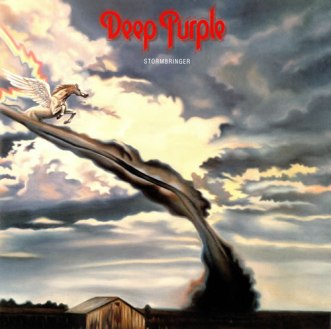
Stormbringer – Capitol – 1974
Apparently Ritchie Blackmore wasn’t super interested in the recording of the Stormbringer album. This strikes as me as odd for two reasons. The first one is that his writing credit is on nearly every song, which is also strange because he said that he hates funky soul music. But the second thing is that the music on the first Rainbow album sounds quite a bit like what went on Burn and Stormbringer (albeit minus the funkier parts) rather than what was on Machine Head.
Just like with Burn, Stormbringer totally fakes you out. It has a fantasy themed cover and the opening track is a killer metal tune whose only big departure from the Deep Purple of old is Jon Lord’s use of proggy Moog tones to kick off the song. After that it’s heavy riffs, pounding drums and shouted vocals about some dark, evil fantasy stuff inspired by Michael Moorecock. This song and the speedy rocker “Lady Double Dealer” are the only heavy rock songs on the entire album.
The rest of Stormbringer is influenced by blues, soul, gospel and funk; if you didn’t know any better, you’d think Deep Purple had replaced Coverdale and Hughes with American soul singers! On the majority of the record, Blackmore uses a clean, non-distorted tone, making generous use of his bottle neck slide guitar for that perfect hillbillyish twang and only occasionally turns up the juice in certain spots. Regardless I find this music just as melodic, catchy and tuneful as the Burn LP. A younger me would have balked at a song like “High Ball Shooter” with its gospel church organ, cowbell and bottle neck sliding filled soul rock but I think it’s a great song! In fact I can’t find a problem with any of the songs on the album.
“Love Don’t Mean a Thing” is soulful FM rock, “You Can’t Do It Right (With the One You Love)” is totally butt shake funky, “Holy Man” is like a gospel ballad and “Hold On” could seriously be mistaken for an R&B soul song found on a station that a rock fan would never turn to. The last two tracks on the album are at least vaguely reminiscent of the Deep Purple of old; “The Gypsy” isn’t heavy but it is a bluesy rock tune with a memorable guitar hook and “Soldier of Fortune”, the album’s other top track, is a melancholy ballad that’s very pretty.
Just like on Burn, David Coverdale and Glenn Hughes really stretch their vocal chords, trade lines and harmonize together doing that soul thang (ya know, “ba-ay-ay-ay-ay-ay-bay, wow!”). I’m sure you’ve heard Whitesnake and know what David Coverdale sounds like but, if not, Coverdale is the one with the lower range. In fact, I didn’t mention this before but it is a little surprising hearing that kind of voice from a scrawny, wussy looking guy like that.
As much as I like the album, two ingredients that are sorely missed or rather underused are Jon Lord’s and Ian Paice’s respective instruments. It seems right after “Stormbringer”, there is not much place for their brand of lunacy; Lord’s awesome distorted Hammond blasts and crazy solos or Paice’s pounding rhythms and fills. Their musicianship is fine but these type of songs don’t give them much space to jam out.
And it’s this new, non-jamming, not as loud Deep Purple approach that resulted in Ritchie Blackmore bidding adieu to start Rainbow. who, strangely didn’t seem much louder, heavier or jammier than this version of Deep Purple…
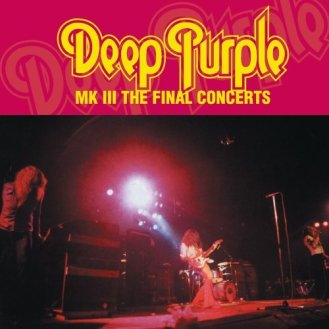
MK III: The Final Concerts – Eagle – 1996
Recorded live on April 3, 4 and 7 of 1975 with the first two nights in Austria and the third in France, MK III: The Final Concerts, as the title cleverly implies, contains recordings of the final gigs performed by the third Deep Purple lineup. Ritchie Blackmore would go off to Rainbow land with the “man on the silver mountain”, Ronnie mothafuckin’ James Dio (!!!) while Deep Purple would make one final run with American guitarist and junkie Tommy Bolin.
This neat double CD set contains performance of three songs from Machine Head, three from Burn and three from Stormbringer along with some blues song called “Going Down” written by some guy named Don Nix as the intro to “Highway Star.” The performances are typically energetic and top notch, the sound is bright and loud and, thankfully, the material they chose from the Coverdale/Hughes albums is the more rockin’ stuff rather the funkier or soulful stuff; specifically “Burn”, “Stormbringer”, “Lady Double Dealer” and “Gypsy.”
In addition to rockers, we get a mega detour into the sexy slow bluuuues of “Mistreated”, which is extended to include a tortured guitar solo and a crotch thrusting, fuckfest of an extended vocal performance from Coverdale in which he implores the sluts in the audience to “keep on rockin’ him.” Also “You Fool No One”, the one tune with a funk beat, sounds harder than the album version.
Some things to note:
1. David Coverdale sounds way breathier live than in the studio. He also sings the majority of the time giving only a little bit of airtime to a coked out Glenn Hughes.
2. A few bars of “Lazy” at the beginning of “Smoke on the Water.”
3. Glenn Hughes goes a little too coke crazy on “Smoke on the Water” and extends the “…to the ground” line to “…to the GROUUUUNNDD, WOOO!!!”
4. WTF extended gospel quota added to the end of “Smoke on the Water” including a bunch of “why don’t CAAALLL me baby?” and “save the WORLD!!!” and “CAN YA HEAR ME, BABY, WOO!!!” gibberish
5. Church organ solo at the beginning of “You Fool No One”
6. Drum solo at the end of “You Fool No One”
7. Extended jam following the drum solo in “You Fool No One” containing a few bars from “The Mule”
8. A ridiculously long intro to “Space Truckin'” which includes more of Hughes’ high pitch, gospel inspired shrieking and Jon Lord playing the 2001: A SpaceOdyssey “Thus Spoke Zarathustra” thingy
9. Extended jam in the middle of “Space Truckin'” which includes parts of different songs including “Child in Time”, Coverdale and Hughes improvising some lines, Hughes noodling away on his bass and shrieking “WOOO HOOO”, Lord making some wicked cool futuristic sounds on his machine and Paice constantly tapping the rim of his snare to let the audience know the crescendo is coming (and not a moment too soon!)
10. Coverdale predicts his classy approach in Whitesnake by editing his own words into “Highway Star” (“she’s got big, fat titties and everything”).
Also alternate versions of “Mistreated” and “You Fool No One” appear as bonus tracks but I think you get the idea.
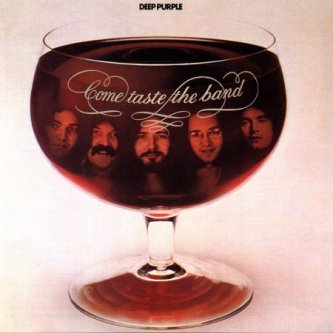
Come Taste the Band – Capitol – 1975
Personally speaking, if you’re not anchored by what Deep Purple should sound like (i.e. MK II), then this last batch of more commercial, radio friendly songs is just as enjoyable as those on the last couple of albums and even rocks a bit harder even if they have dumb as shit lyrics and generic FM rock titles like “Comin’ Home”, “Lady Luck”, “Gettin’ Tighter”, “Dealer”, “I Need Love”, “Drifter” or “Love Child.”
Known by fans across the globe as “The Tommy Bolin album” (actually not really), Come Taste the Band would be Deep Purple’s final studio album for nine years. Ritchie Blackmore had left Deep Purple to rock ‘n’ roll with Ronnie Dio in Rainbow and the group recruited American guitarist Tommy Bolin (if you must know, he played in the James Gang, Patch of Blue, Zephyr, Energy, Billy Cobham, Alphonse Mouzon and Moxy along with releasing a couple solo albums), who apparently dyed his hair two different colors and did a lot of smack.
I guess it was David Coverdale who convinced Jon Lord to continue the group because he and Tommy Bolin wrote nearly every song on Come Taste the Band. For the most part, the album sounds like a mix between early Whitesnake, the James Gang and some non-descript 70s hard rock band with a couple of particularly funky songs such as “I Need Love” and “Love Child” thrown into the mix. Unlike Burn and Stormbringer, where the songs seem to jump around stylistically, nearly every song on Come Taste the Band can be described as mainstream hard rock. While not the pounding metal of yesteryear, Tommy Bolin can still play some mean distorted cock rock riffs and bluesy solos while throwing in some bottle neck blues for good measure.
The one exception is “This Time Around/Ode to G”, primarily a piano driven, R&B/soul ballad which turns into a sort of dark, heavy prog thing in its second half. But, for the most part, these songs are just FM hard rock songs with concise arrangements geared, at least in my mind, to showcase David Coverdale’s and Glenn Hughes’ caterwauling and Tommy Bolin’s guitar wailing. There’s very little in the way of showcasing Jon Lord’s or Ian Paice’s individual talents if you get me. Lord plays more whirling Moog synth than organ or something you’d find on a funk record and Paice, while a very good drummer, doesn’t do his crazy, wicked pounding or fills that characterized his earlier work.
Regardless though, as I just said, it is a very good pot smokin’, beer guzzlin’, “leave your brain at home” 70s rock record. In the year after this album came out, Deep Purple came to an end, David Coverdale started Whitesnake with Jon Lord, Tommy Bolin died of a smack overdose and Ian Paice and Glenn Hughes continued on in various projects until Paice, Lord and the rest of the MK II saw dollar signs ahead.
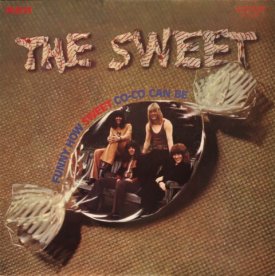
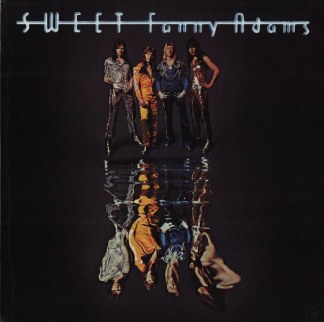
The Sweet (a.k.a. Sweet) – lead singer Brian Connolly, guitarist/keyboardist/singer Andy Scott, bassist/singer Steve Priest and drummer Mick Tucker – are mostly known (at least in the States anyway) as the above pictured, cute looking glam rock band with the catchy original and Mike Chapman/Nicky Chinn penned hits like “Ballroom Blitz”, “Wig Wam Bam” and “Hell Raiser.” And, by the time they did “Love Is Like Oxygen”, they didn’t even wear makeup anymore! But, even if that wasn’t the case, the glam tag is only a very small part of the picture. In fact, to even call the Sweet a glam rock band is about as accurate as saying that “You Really Got Me” and “All Day and All of the Night” are entirely representative of the Kinks’ discography. It’s a bloody lie is what it is! Perpetrated on the notion that after a few TV appearances, the Sweet liked being a gittery teeny bopper band when, in actuality, they would have preferred to have rocked in front of denim clad Black Sabbath and Deep Purple fans. But that’s the brush you paint yourself with when, out of desperation, you record songs like “Little Willy” and “Wig Wam Bam” (which I like a lot, mind you). And that’s why I’m here to blow the lid off their operation so read on, will you?
Also, prior to Sweet, Mick Tucker played in Wainwright’s Gentlemen with Ian Gillan of Deep Purple. Ain’t that a hoot?
First Recordings 1968-1971 – Repertoire – 1991
The Sweet formed in 1968 under their original name the Sweetshop but another group had that name so they chopped the “shop.” The group already consisted of singer Brian Connolly, bassist Steve Priest and drummer Mick Tucker but Andy Scott wouldn’t complete the classic lineup until 1970. The original guitarist was some guy named Frank Torpey and he was replaced by another guy named Mick Stewart. Before they started getting successful with those cutesy Mike Chapman/Nicky Chin penned hits, the Sweet released four unsuccessful singles (the first with Torpey and the other three with Stewart) all of whose a and b sides were compiled onto First Recordings 1968 – 1971 along with four previously unreleased tracks.
So what kind of music were the Sweet making in their first couple years of existence? Basically they were a typical mid/late 60s rock/pop band who played in a variety of sub-genres including light weight mid 60s rock, quirky psychedelic pop, folky rock, Steppenwolf style funky rock, bluesy rock and soul but absolutely no bubblegum. However don’t think the band were using too much Hendrix/Townsend-esque feedback as these songs tend to lean towards the lighter side of 60s rock. The obvious exceptions are the fuzz rockers “The Spider” and “My Little Girl from Kentucky.” Most of the melodies and arrangements are nice (especially memorable opening track “The Lollipop Man”) , with the sound filled out with keyboards, piano or horns and the songs evoke whatever emotions they’re supposed to (happy, pensive) but there is nothing distinctly *Sweet* about them.
Brian Connolly has yet to adapt that high pitch yelling voice. Instead he sounds like a normal British singer, hitting the notes just fine but not doing anything that sets him apart from the rest. Neither original guitarist Frank Torpey nor his replacement Mick Stewart are particularly remarkable players either though I like the psychedelic solos on “It’s Lonely Out There.” Likewise neither Steve Priest nor Mick Tucker are doing anything that interesting with their respective instruments aside from providing a solid rhythm section.
In conclusion this early version of Sweet was another typical mid/late 60s band; cutting singles, playing the club circuit and trying to make it but, like most of them, the best they had to offer at this time was a collection of neat, little tunes that otherwise didn’t really stand out from the competition and nowadays serve more as a fun relic from the era.
Funny How Sweet Co-Co Can Be – RCA – 1971
The true saga of Sweet began in 1970. Guitarist/keyboardist Andy Scott joined the band to complete their classic lineup and the group hooked up with producer Phil Wainmen and the songwriting duo of Mike Chapman and Nicky Chinn, who wrote a bunch of songs for the Sweet in order to keep their career afloat. Members of the band did write their own material but the label didn’t allow that material to be the main showcase of the group’s talent. The result of the Chapman/Chinn pairing up with the group is a whole bunch of catchy, cutesy little singles and this here album called Funny How Sweet Co-Co Can Be.
What’s most fascinating to me about the first Sweet LP is how incongruous it was with what was going on with rock and pop at the time. The album may have come out in 1971 but it sounds like the type of thing that would have been released in 1966. The label hired a group of kids who might or might not have actually played on every track of their album while outside writers supplied a bunch of material in various sub-genres of rock and pop and marketed it to the little kiddies as “bubblegum.” However there is only really one true “bubblegum” song on the album; the Archies flavored “Funny Funny.”
The rest of the album is a mish-mash of styles that shows that neither Mike Chapman/Nicky Chinn nor the Sweet had much of an idea of what kind band they were trying to be. With that said, it’s for the most part a highly listenable, catchy and fun album. Brian Connolly hasn’t began using his awesome, high pitch shouting that makes up the bulk of the classic Sweet material and helps give it so much personality. Instead he uses a calm, pleasant, normalish British singing voice that occasionally sounds like Marc Bolan, which I will discuss in further detail momentarily. Andy Scott’s guitar playing has none of the distorted fire power or killer chops it would have as early as their second album, instead playing it quiet and normal with little or no distortion, throwing in the occasional steel guitar slide, save for album closer and obvious exception “Done Me Wrong All Right.” Steve Priest and Mick Tucker are just a solid human metronome. And I believe Brian Connolly is the only member on “Co-Co” and “Funny Funny” with the instruments being played by session musicians.
The song count goes as follows:
Four Sweet penned (and played!) originals: “Honeysuckle Love” – dead ringer for T. Rex right down to the singing and the basic “bap-bap”, “Bang a Gong” style chord progression, really good! “Jeannie” – acoustic, jangly folk rock like something the Beatles or the Kinks did or, I dunno, like “Mrs. Robinson” complete with “la-la-la” backing vocals, pretty good regardless “Spotlight” – solid attempt at mysterious sounding, 1966 era psychedelia complete with duel track acoustic/electric guitars and multi-part “ah-ah-ah” harmonies. “Done Me Wrong All Right” – hard rock!!! Straight forward, to the bone, hard rock and the only song that gives any indication of Sweet’s future direction. I take back what I said about it being different from other songs on the album because according to wiki, it wasn’t even on the album!
Six Mike Chapman/Nicky Chinn compositions: “Co-Co” – aside from the guilty pleasure, stupid/catchy chorus of “Ho-chi-ka-ka-ho Co-Co”, could pass for acoustic T. Rex minus the island rhythm and steal drums “Chop Chop” – okayish T. Rex/Beatles pop song, nuttin’ essential but has a cute chorus that goes, “timber” “Santa Monica Sunshine” – countryish rock, catchy chorus “Funny Funny” – aforementioned, Archies-inspired bubblegum. “Tom Tom Turnaround” – very pretty countryish, folk ballad “Sonny Sleeps Late” – folky, pop rock, complete with “Get Back” style galloping percussion and twangy, country-ish guitar
Two covers” “Reflections” – Supremes cover, sounds pretty good for a soul song covered by a white, British singer “Daydream” – Lovin’ Spoonful cover, mid-60s, pre-hippy, happy-go-lucky, Sesame Street music played on acoustic guitar
See what I mean? Lotsa diversity but no real focus. That’s no way to carry a career. It’s impressive that they could handle so many styles so well but still, ya know.
Sweet Fanny Adams – RCA – 1974
Although the group’s leap from their first to second album is pretty huge, it isn’t fair to call it an abrupt change considering that the album was released three years after the first and that the group had enough time to cultivate their hard rock/heavy metal sound; after all the glammy, foot stomping, hand clapping, Chapman/Chinn penned, Marc Bolan/David Bowie style singles they released during that time (“Ballroom Blitz”, “Hellraiser”, “Blockbuster” and “Teenage Rampage”) are all backed by tighter, harder, more musically complex tunes that the band wrote themselves.
As alluded above, on Sweet Fanny Adams, Sweet have all but entirely turned into a mean ass, hard rock/heavy metal band. Andy Scott’s guitar is super loud, bright and distorted, Brian Connolly is now shouting the lyrics rather than singing, Mick Tucker’s drumming is ferocious in a vein similar to someone like Ian Paice and the group is putting those multi-part, high pitch vocal harmonies (“ahh-ahh-ahh”) to good use. Also both Andy Scott and Steve Priest sing a good deal on the album possibly due to Connolly being in an accident which damaged his vocal chords.
The album consists of four mean hard rock songs that might evoke comparisons to Queen and Deep Purple, two punky glam rock stompers that sound like they should have been released as singles rather than on the album, a fun but pointless cover of “Peppermint Twist” and two rip-roaring metal tunes that are essentially the New Wave of British Heavy Metal three or four years ahead of its time.
In fact, I feel that “Set Me Free” (later covered by Saxon) is so ahead of its time and so important to mention in light of the group’s overall body of work that I’m setting a separate paragraph aside for it! I was pretty darn surprised when I heard “Set Me Free” for the first time as I was not expecting chugga-chugga style, proto speed metal with a wicked guitar workout to have come out in 1974; especially considering that, at that time, Judas Priest, the band known to have invented that approach, was still just another blues based heavy rock band.
The rest of the album isn’t nearly as metal but still totally great and the angry, galloping, electric/acoustic double tracked “Sweet F.A.” has one of the most questionable lines you’d hear uttered by a group allegedly marketed to teeny boppers; oh what the hell am I talking about? They were already performing the tacky, sexist “Someone Else Will” so I shouldn’t be shocked by a line that goes “if she don’t spread/I’m gonna bust her head.” What’s strange though is that I would have assumed that the angry, melodramatic hard rocker “No You Don’t” (complete with blatant “Pinball Wizard” musical homage) was an original while the glam/punk “Rebel Rouser” (later covered by the Meatmen) is a Chapman/Chinn tune but, oddly, they are switched. The other glam tune is the awesome Chapman/Chinn lesbian anthem “A.C.D.C.” (later covered by Joan Jett).
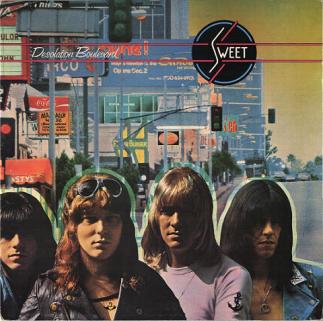
If you live in North America and you found a copy of Desolation Boulevard in your mom’s record crate or in the $1 bin at your local used record shop, then you’ve been bamboozled! Like other labels did with British bands they were trying to market to American audiences, the group’s American label assembled an album consisting of tunes from a couple albums and singles, ignoring the integrity of the group’s catalog – in this case, sampling songs the from Sweet Fanny Adams, Desolation Boulevard and the group’s various singles. The only unique thing about it is the awesome “I Wanna Be Committed” but, since I have the CD reissue of Desolation Boulevard, that’s rendered useless as well.
The American Desolation Boulevard is the first Sweet album I heard and it turned me into a fan but that doesn’t excuse the fact that American fans missed out on songs like “Heartbreak Today”, “Rebel Rouser”, “Peppermint Twist”, “Restless”, “Turn It Down”, “Medusa”, “Man with the Golden Arm”, “Breakdown”, “My Generation” and the original, bare bones recording of “Fox on the Run.”
Desolation Boulevard, though not bad is disappointing compared to Sweet Fanny Adams. I would have preferred the group’s many fine, hard rocking originals that appeared as b-sides – such as “Own Up, Take a Look at Yourself”, “Burn on the Flame” or “Someone Else Will” – over what made the a-list. “My Generation” is great; Brian Connolly does his best stuttering Roger Daltry impression, Steve Priest nails John Entwhistles’s noodly bass parts and Mick Tucker pulls off Keith Moon’s rolls just fine but it’s still just a cover of “My Generation.” Also the cover of the theme from Frank Sinatra’s 1955 heroine vehicle Man with the Golden Arm is something you perform in concert to get the crowd pumped not subject people to in their homes no matter how good Mick Tucker’s drum solo is. And the boring ballad “Lady Starlight” can take a hike as well.
On the other hand, Desolation Boulevard is almost entirely devoted to hard rock of various tones and moods, containing nothing as metallic as “Set Me Free” nor as sugary as “Peppermint Twist.” The band does some great stuff with arrangement and electric/acoustic double tracking in “The Six Teens” and “Medusa” and tear it up on songs like “Solid Gold Brass” and “Breakdown.” Also it’s interesting to note how it’s becoming more difficult to tell a Chapman/Chinn tune from an original. For instance the Chapman/Chinn penned “Turn It Down” and the original “Fox on the Run”(the original album version doesn’t include the bubbling, space synthesizer or the “ah-ah-ah” backing vocals) both are better interpretations of the basic, big-Major-chord-plus-anthemic-sing-along-chorus approach of Kiss or Slade. Did I also mention that Brian Connolly has a really great, tough but melodic singing voice?
In 1975 the Sweet decided to give it a go on their own, ditching Mike Chapman and Nicky Chinn and deciding to write their own material like 99.999% of their contemporaries.
Give Us a Wink! – Polydor – 1976
As I just said a moment ago, in 1975, the Sweet told Mike Chapman and Nicky Chinn that they were going to write and produce their own albums. And this was the failing result—
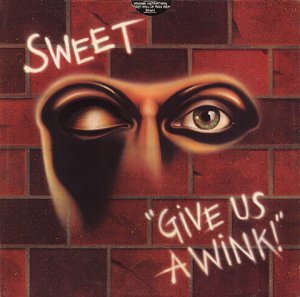
Give Us a Wink! is a fanstaic album, more consistently pleasing than Desolation Boulevard and a perfect example of why one shouldn’t judge a book by its cover! With a title like Give Us a Wink!, a cover like the one pictured above and a bunch of corny graffiti which reads stuff like “wink off” sprinkled on the back, one who was only familiar with Sweet’s glam singles might be inclined to believe the album is even more of that kinda stuff.
But that would be a incorrect! Instead the Sweet have recorded an album of hard rock/heavy metal tunes that once again might evoke thoughts Deep Purple or Led Zeppelin crossed with maybe a little bit of Queen-esque, high pitch backup vocals and synthesizer riffs. And again it should be noted that Andy Scott has a loud, heavy, crunchy and reverbed guitar tone that really brings out those riffs. I neglect to think why, say, Deep Purple’s “Burn” couldn’t have been produced with the same gusto.
Although I like the opening track “The Lies in Your Eyes”, it might come off as a novelty song to some due to its blatant musical homages to “Baba O’Riley” and “Satisfaction” but, then on in, the next seven songs are killers. Okay also closing song “Healer” has a weird, funky groove that doesn’t really match the rest of the album but what would a Sweet album be without at least one song that goes completely against the style of the rest of the album?
How do you describe good hard rock? Every song is well crafted with excellent riffs, multiple parts and awesome guitar/drum interplay. “Cockroach” is a “Speed King” style grunter. “Keep It In” has a bunch of wicked drum rolls. “4th of July” is a toe tapping number with a bit of bluesy piano keys thrown for good measure. “Action” is a faster, punkier tune. “Yesterday’s Rain” is a driving, mid-tempo number with “Rocka Rolla” style motorcycle riffs. “White Mice” is an uptempo, Deep Purple-style rocker complete with dramatic Ritchie Blackmoore-esque guitar solos. And aside from aforementioned “The Lies in Your Eyes” and “Healer”, that about covers it.
So get Give Us a Wink! or something.
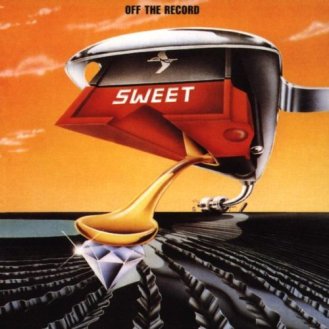
Off the Record – RCA – 1977
Although they would release one more album after Off the Record with Brian Connolly, I feel this is where the young, sassy, energetic and raucous version of Sweet ends and their next LP is where they would emerge looking older, fatter and trying to make more “mature” music so to speak.
Anyhoo, Off the Record is another damn fine, melodic and tuneful LP although it’s a heck of a lot more diverse than Give Us a Wink!. Whereas Give Usa Wink! is basically a 70s hard rock/heavy metal album, Off the Record incorporates all kindsa different genres. Sure the quintessential elements are there. The album still has the hard rock and heavy metal but the band has thrown in other stuff; a ballad, a dance funk tune, a borderline punk song and another NWOBHM tune that comes completely out of left field. Also the Queen inspired synth and high pitch backup vocal influence is on high throughout.
The tone is set with the uplifting, fist-pumping “Fever of Love”, a bouncing, galloping hard rock tune with a big, happy chorus meant to evoke feelings of positivity and love even in the darkest soul. Yeah it sounds corny but, hey, we can’t always think of the world as a dark, lonely, cold and loveless place, can we? Who says hard rocking music can’t be positive? I’m too lazy so I’m just gonna describe the rest of the songs in list format; this oughta do in capturing the mood and feel of the album:
“Lost Angels” – harmonious synth and backup vocal filled, acoustic/electric anthem “Midnight to Daylight” – melodic hard rocker (complete with harmonica!) “Laura Lee” – acoustic power ballad “Windy City” – down and dirty heavy rock epic “Stairway to the Stars” – Free-esque rocker (complete with cowbell!) “Live for Today” – fist pumping, near punk song with awesome shoutalong chorus “Funk It Up (David’s Song)” – butt shaking, dance funker (complete with shout along lyrics, imitation soul vocals and hand claps!) “Hard Times” – groovy Deep Purple style grunter “She Gimme Lovin'” – aforementioned, high speed, metal ripper
Apparently the track list is also different from the European version but as far as I’m concerned, this sequence works fine, especially in ending the album on such a high octane note.
So how’s that for diversity? Could you imagine Judas Priest performing a straight ahead funk song? Could you picture Sly Stone performing a raging metal tune? Once again it’s that type of diversity that I enjoy about the group.
Anyway, the group would follow this with one more album before Brian Connolly hit the road and Sweet would morph into a duller, less flashy version of themselves. Stay tuned for the fun!









 savagehippie